ANZAC Day: Stories That Still Shape Us
ANZAC - originally standing for the Australian and New Zealand Army Corps - was first used to describe the combined forces who fought in World War I, most notably at Gallipoli in 1915. Over time, its meaning has grown to represent all Australian and New Zealand servicemen and women who have served in conflicts, including World War II and beyond. Today, ANZAC stands for courage, sacrifice, resilience, and mateship - values that continue to resonate across generations.
This ANZAC Day, four of us here at Naked Creative have found ourselves reflecting on our own family connections to service. What started as Charlotte asking a simple question or two in the office has quickly turned into a larger conversation, as we’ve begun unpacking stories, piecing together histories, and sharing them with our own children - ensuring these legacies live on.
Charlotte’s Story
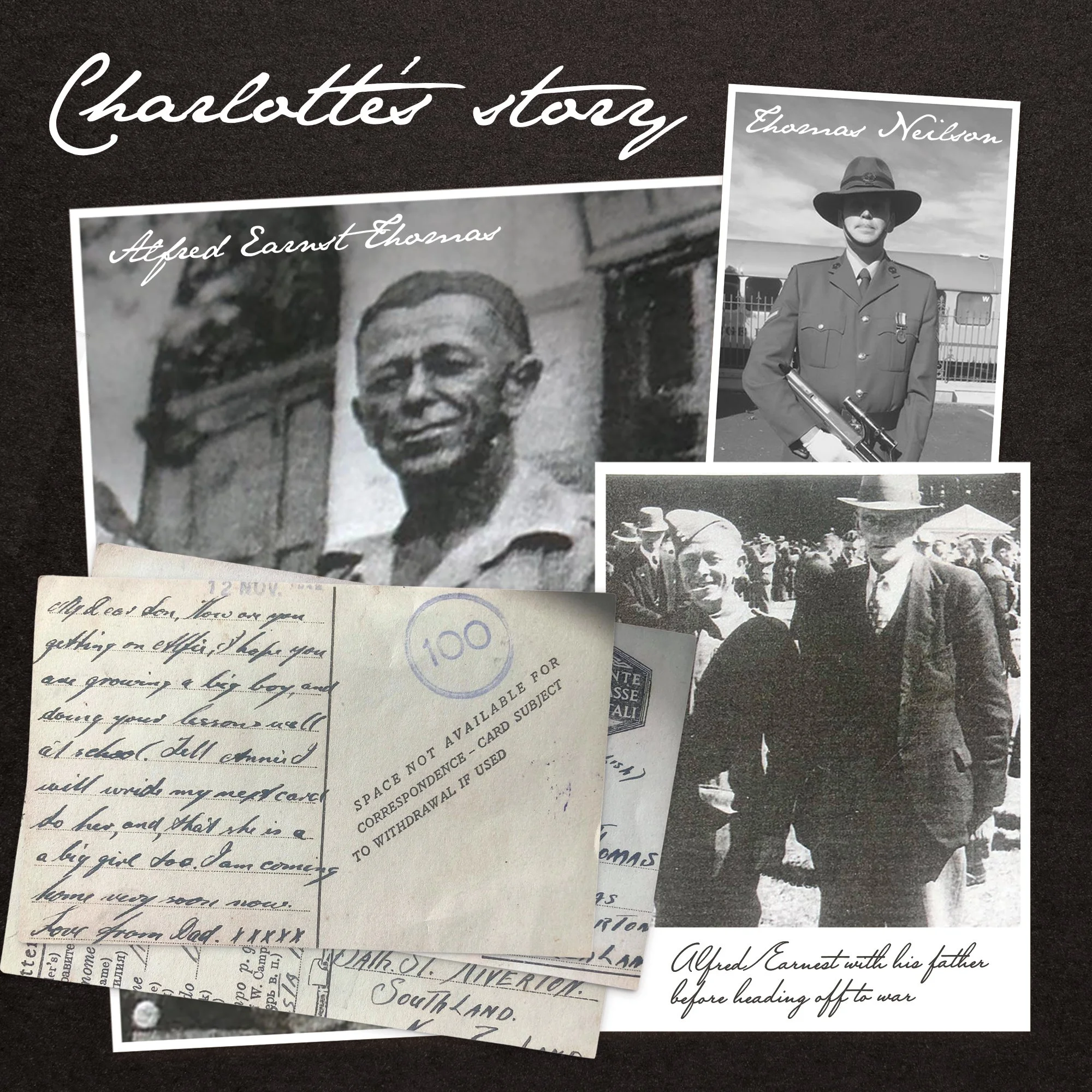
Charlotte comes from a family where military service runs deep across generations. Today, that legacy continues through her brother William, an Officer in the New Zealand Army who continues to serve. Her brother Thomas (Tom) also served in the New Zealand Army for eight years in Queen Alexandra's Mounted Rifles, reinforcing a strong and ongoing connection to the Defence Force within her immediate family.
Looking further back, Charlotte’s great-grandfather, Alfred Earnest Thomas of Riverton, served in World War II and was taken as a prisoner of war (POW). He was held in camps in both Italy and Germany, enduring the realities of captivity far from home. Among Charlotte’s family photos are images of Alfred before his capture, as well as a postcard he sent to his son, Alfie, while he was a prisoner of war, offering a rare and deeply personal glimpse into his experience. These postcards reference Bath Street in Riverton - his family home, and the place he would eventually return to, anchoring his story to home even while he was overseas.
Her family’s history of service extends even further. George Goble, her Nana Belle’s father, served in World War I. Originally from Ireland, he went to war for New Zealand but became ill during his service - potentially from chemical poisoning - and was returned home, where he later died of leukaemia. His early death had a lasting impact on the family, shaping the lives of those who followed, including Belle, who left school at a young age to look after the family farm, and reinforcing the quiet cost of war beyond the battlefield.
Charlotte has uncovered just how interconnected and layered her family’s history is, spanning both world wars and multiple generations of service. Today, she carries that legacy forward in her own family, giving her youngest son the middle name Thomas - a name shared by her brother, her grandfather, and great-grandfather, all of whom served, ensuring that connection is not only remembered, but continued.
Carla’s Story
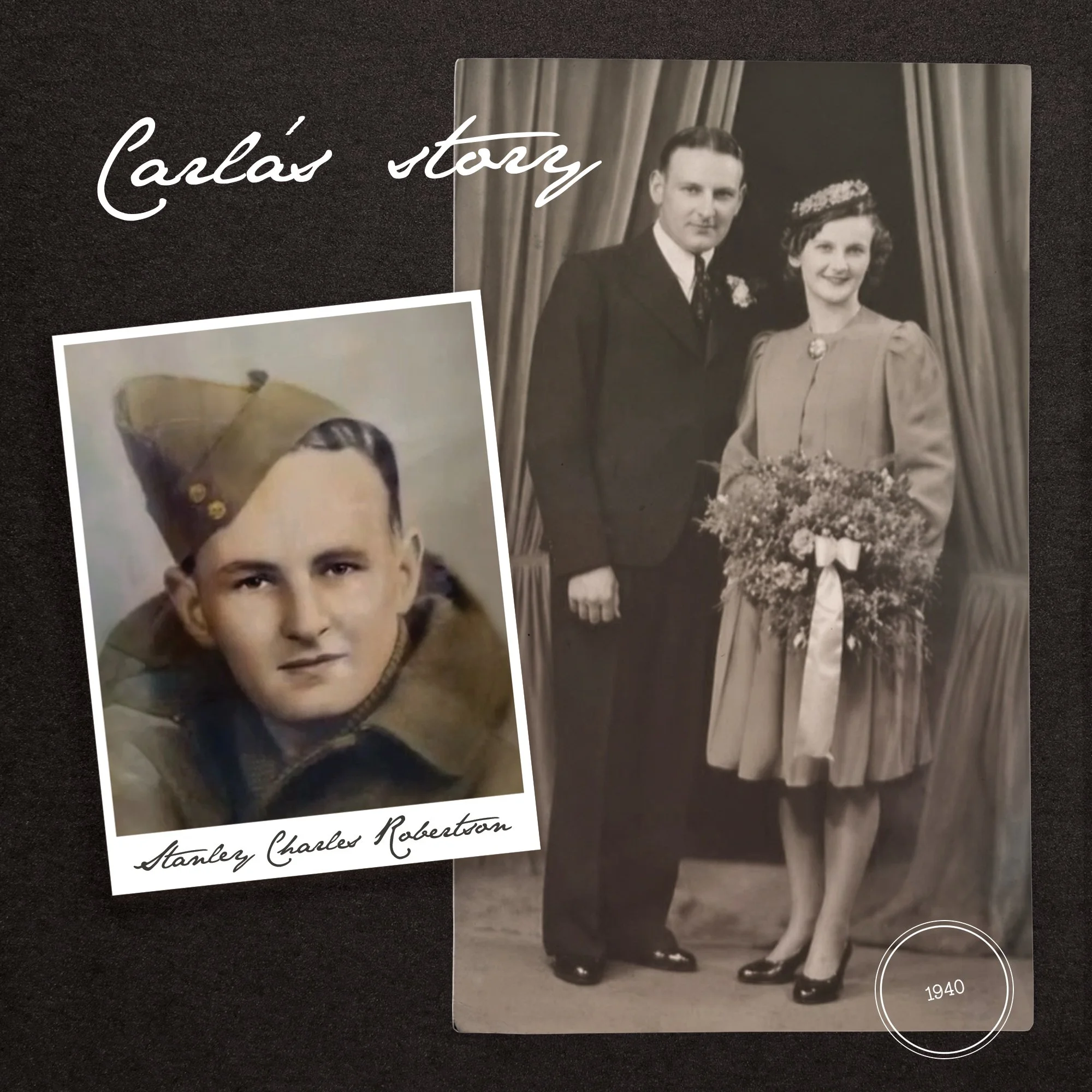
Carla’s connection to service is reflected through her grandad (Poppa), Stanley Charles Robertson, who was called up to serve in World War II as a mechanic. His role involved maintaining and repairing military vehicles, including trucks that were essential for transporting troops and supplies.
Before heading to war, Stanley married his partner Catherine earlier than planned - the day before he was shipped out - a decision shaped by the uncertainty of the time. During his service, he worked closely with soldiers under demanding conditions, ensuring vehicles remained operational and supporting the broader war effort. He even had a pet dog with him for a time while he was overseas, a small source of companionship amid the realities of war.
Stanley returned home in 1945. Like many of his generation, he rarely spoke about his experiences, leaving behind only fragments of stories that continue to be pieced together today.
Carla now honours that connection in her own family, naming her son Charlie after Stanley Charles - yet another quiet but meaningful way of carrying that legacy into the next generation.
Justine’s Story
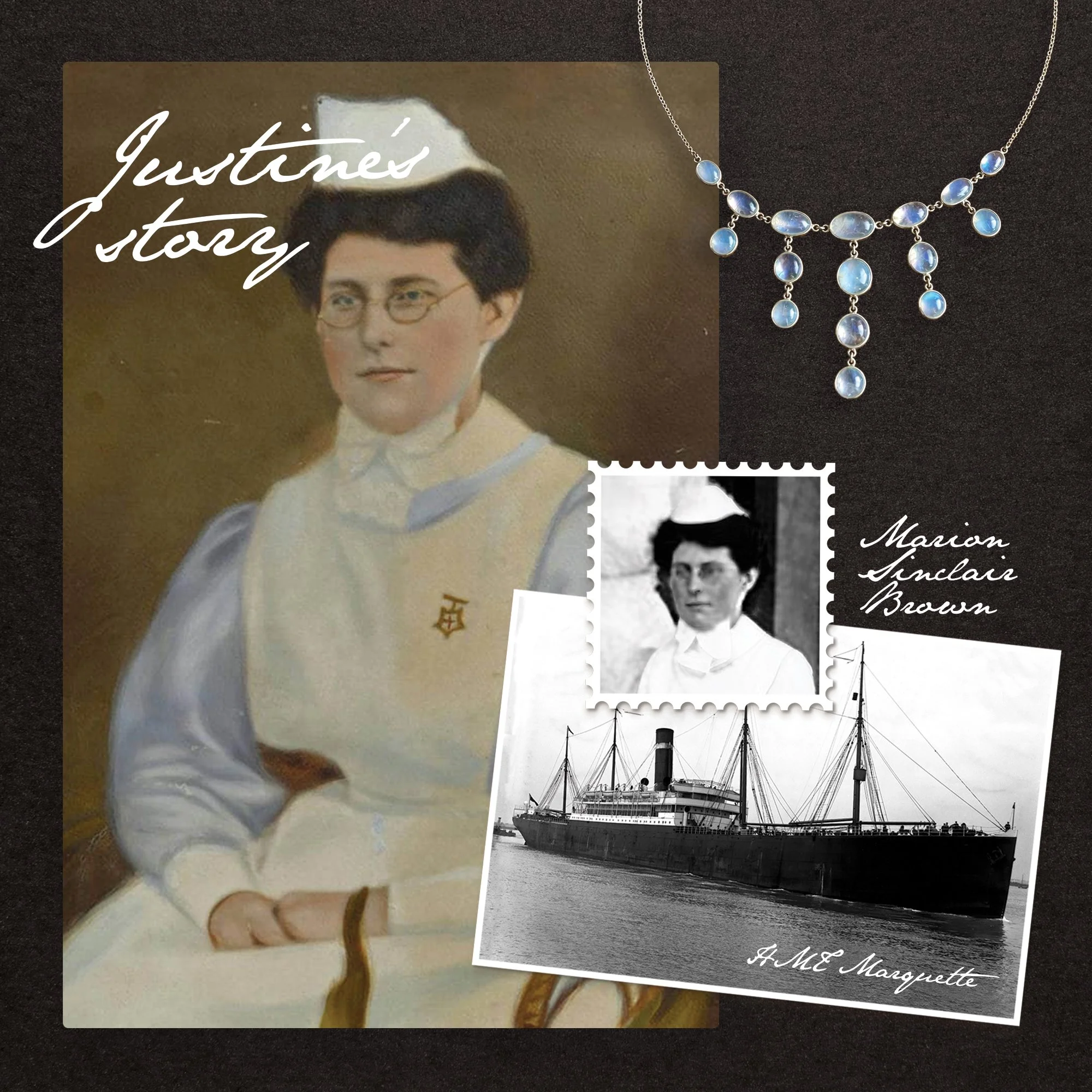
Justine’s family story reaches back to World War I through her great-great-aunt, Marion Brown. Raised in Waimatuku, Southland, Marion trained as a nurse in Riverton before serving overseas as part of the New Zealand medical contingent.
In October 1915, she was aboard the HMT Marquette, transporting troops and medical staff from Alexandria toward the Gallipoli campaign. The ship was torpedoed and sank rapidly in the Aegean Sea. Among those lost were ten New Zealand nurses, including Marion - now remembered as part of the “Marquette nurses.” She was 35 years old.
The tragedy remains one of the most significant losses of New Zealand medical personnel during the war and is still commemorated today. It is also remembered for the controversy surrounding the decision to send medical staff aboard an unmarked troopship, despite the availability of a hospital ship departing at the same time.
Within Justine’s family, Marion’s memory lives on through a deeply personal heirloom. Just days before boarding the Marquette, she sent a moonstone necklace home to her sister in Southland. That necklace has since been passed down through the second daughter of each generation and will one day be passed to Justine’s younger sister, continuing a powerful thread of remembrance.
Breea’s Story
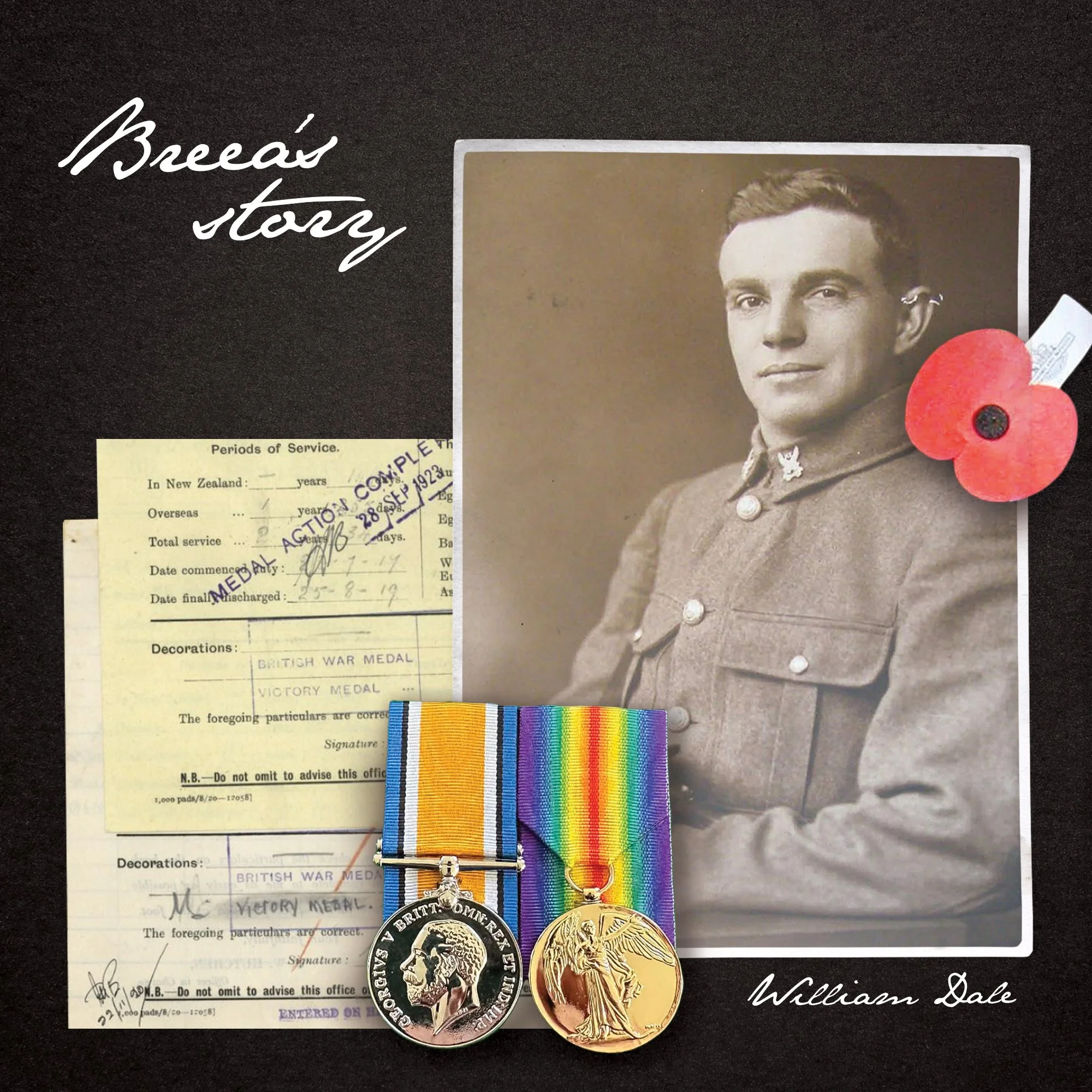
Breea’s great-grandfather, William Dale, served in the First World War. Born in Tapanui, he was the fourth child and third son of William Dale and Sarah Jane Ottrey. Before enlisting, he worked as a shearer.
William enlisted in the New Zealand Army for the duration of the war, serving as Private #61238. On 16 November 1917, he departed Wellington aboard the RMS Tahiti with the 31st Reinforcements, bound for Liverpool. After arriving in January 1918, he trained at Sling Camp before being deployed to France in March. He joined the 1st Battalion, Auckland Infantry Regiment in April 1918 at Etaples.
Following the end of the war, William returned home to New Zealand in 1919 and was formally discharged on 25 August of that year. Like many soldiers of his generation, he rarely spoke about his experiences.
In 1926, William married Florence Evelyn Sheddan, and together they had four children: Annette, David William, Kevin Charles, and Maureen. Breea’s Gran, Maureen, often recalled how deeply the war had affected him, and how those memories stayed largely unspoken.
Although Breea doesn’t have extensive personal stories from his time in service, she holds two of his medals, a tangible connection to his life and sacrifice. Each ANZAC Day, her family proudly wears these medals in remembrance of William and all those who served, honouring their courage and ensuring their legacy lives on.
A Shared Legacy
While each story is different, there is a common thread: service, sacrifice, and the quiet resilience of those who came before us. These are not just historical accounts; they are lived experiences that continue to shape families, identities, and perspectives today.
What began as one story has become many. And by revisiting, sharing, and passing them on, we ensure they are not forgotten.
This ANZAC Day, we remember - not just the history, but the people behind it.